• About
  • Services / Koolitused (EST)

Bogáta Timár

  • Lapsed võivad olla Orbáni režiimi hukatus

    December 16th, 2025

    14. detsember 2025.

    13. detsembril kogunesid kümned tuhanded ungarlased presidendipalee ette, nõudes presidendi Tamás Sulyoki tagasiastumist ja valitsuse vastutust süstemaatilise ja tõsise väärkohtlemise eest riiklikus lastehooldussüsteemis. Värskelt avaldatud dokumentide kohaselt oli valitsus teadlik lastekodudes ja muudes asutustes toimuvast laste füüsilisest, emotsionaalsest ja seksuaalsest väärkohtlemisest, kuid ei võtnud midagi ette. Meeleavaldust juhtis opositsiooniliider Péter Magyar.

    Kuulujutud, et Budapesti Szőlő tänava noorte kinnipidamiskeskuses (mis ei ole noortevangla, nagu Delfi väitis) toimuvad kohutavad asjad, olid ringelnud juba mitu kuud. Inimkaubandus, seksuaalne väärkohtlemine ja isegi kõrge positsiooniga poliitikute – sealhulgas asepeaminister Zsolt Semjéni – kaasatus olid arutluse all sõltumatus meedias ja opositsioonipoliitikute sõnavõttudes, kuigi enamasti ilma kindlate tõenditeta. Juhtumi tõsidus tõusis uuele tasemele, kui lekkinud videomaterjalist võis näha, kuidas üks endine töötaja haaras kinni noore poisi, lükkas ta üle laua põrandale, lõi teda, astus talle peale ja peksis teda jalaga, samal ajal kui teised lapsed vaatasid kõike õudusega pealt. Teisel lekkinud videol oli näha, kuidas hooldaja lõi last kumminuiaga pähe. Péter Magyar lekitas ka 2021. aasta aruande, mis oli suunatud otse valitsusele ja milles kirjeldati üksikasjalikult riigi hoole all olevate laste laialdast füüsilist, emotsionaalset ja seksuaalset kuritarvitamist, kuid selles osas ei võetud toona vastu mingeid olulisi meetmeid.

    Kõigest mõnepäevase etteteatamisajaga meeleavaldus ei olnud Magyari suurim (senine rekord kuulub 1956. aasta mälestusmarsile selle aasta 23. oktoobril, kus osalejaid oli ligikaudu 160 000). See oli siiski piisavalt suur, et täita mitte ainult presidendipalee ees olev väljak, vaid ka naaberväljak ja tänavad. Meeleavaldus oli tõsine ja ebatavaliselt vaikne, ometi oli õhus tunda raevu. Osalejad hoidsid käes tõrvikuid ja kuhjasid suurde hunnikusse mänguasju – annetusi erinevatele lastekodudele, mille laiali jagamisega Magyar on juba algust teinud.

    Péter Magyar teab hästi laste väärkohtlemise sügavat mõju ühiskonnale – 2024. aasta esimestel kuudel käivitas just see teema tema poliitilise karjääri. Toona, nn armuandmisskandaalis, selgus, et Ungari tollane president Katalin Novák oli andnud armu lastekodu asedirektorile, kes oli süüdi mõistetud selle eest, et oli püüdnud varjata ühe lastekodu pedofiilist direktorit. Skandaal raputas isegi Orbáni tuumiktoetajaskonda ning lõppes riikliku rahutuse järel nii Nováki kui ka justiitsministri Judit Varga tagasiastumisega. See oli valitsuse jaoks väga haruldane taganemine, kõrvalekalle senisest jõupõhisest strateegiast, mis kaitses raevukalt oma sõdureid, teiste seas presidenti. See oli ka hetk, mil Varga endine abikaasa Péter Magyar, kes oli seni olnud tihedalt seotud valitsusele sõbralike äriringkondadega, otsustas loobuda kõigist oma ametikohtadest ja režiimi vastu sõna võtta.

    See, kuidas Magyar suutis tabada väga olulist ühiskondlikku närvi, üllatas väidetavalt teda ennastki. Mõne kuuga ehitas ta üles arvestatava poliitilise liikumise. 2024. aasta juuniks oli sellest saanud täieõiguslik erakond, mis sai Euroopa Parlamendi valimistel paremuselt teise tulemuse. 2024. aasta lõpuks oli Magyari partei Tisza sama populaarne kui Orbáni Fidesz, kui mitte isegi populaarsem, ning 2025. aasta jooksul on tema edu veelgi kasvanud.

    Kõige viimane asi, mida Orbáni režiim vajas, oli järjekordne laste väärkohtlemise skandaal. Lapsed ja nende kaitse on iga ühiskonna peamine moraalne printsiip ja sõltumata poliitilistest eelistustest on seda äärmiselt keeruline välja vabandada või õigustada. Valitsus muidugi püüdis süüdistada ohvreid, loetledes üles kuritegusid, mille pärast lapsed üldse parandusasutuses olid, kuid see ei vähendanud ühiskonna empaatiat nende suhtes kuigivõrd. Rahvas ei näinud nendes kurjategijaid, vaid vaevu teismeeas poisse, kes olid surmani hirmunud, pekstud ja maha tallatud inimeste poolt, kellele oli antud ülesanne nende eest hoolitseda. Samal ajal kõlasid taustal mälestused pedofiiliaskandaalist, inimkaubandussüüdistustest ja kummastavast asjaolust, et mitte keegi pole siiani nende eest veel vastutust võtnud.

    Riigi hoole alla jäänud lapsed ei ole muidugi ainus osa ühiskonnast, mille praegune valitsus on hüljanud. Arstid, õed, patsiendid, eriravi spetsialistid, õpetajad, üliõpilased, kultuuritöötajad, vabaühendused, teadlased, väikeettevõtjad, põllumajandustootjad, riigiteenistujad ja paljud teisedki võiksid selles vallas veel palju öelda. Paljud näevad praeguses juhtumis järjekordset süstemaatilist altvedamist, mis on iseloomulik viimasele 16 aastale. Aga laste puhul tundub see olevat isegi tavatult alatu. Aga tuua sellesse lapsed tundub isegi seniste altvedamiste kõrval alatumast alatu.

    Ma ei ole kindel, kui paljud oleksid ennustanud, et lastest saab lõpuks Viktor Orbáni ja tema režiimi Achilleuse kand. Aga nad on tabanud teda valusasse kohta – ja tugevdanud tema vastast – juba teist korda järjest kahe aasta jooksul. Valimised toimuvad 12. aprillil: kes teab, võib-olla toovad need isegi muutusi.
  • Will America become like Hungary?

    November 18th, 2024

    Now that Donald Trump has won the presidential elections, many wonder what’s to come. Knowing Trump’s style of leadership and his numerous comments disregarding democratic institutions (he famously said that after he is elected, American people will no longer have to vote), many see him as an aspiring despot who will eventually reframe American politics into autocracy. His emergence has also been likened to other countries that have in the past years taken an autocratic turn: Erdoğan’s Turkey, Vučić’s Serbia, and, of course Viktor Orbán’s Hungary. Will Trump turn America into Hungary’s direction?

    Viktor Orbán has long been seen as the model example to follow for aspiring autocrats, especially in Europe. Before he turned out to be an agent of Russia, he even had sizable support in Estonia, mainly by EKRE politicians and voters. They saw him as a “freedom fighter” who stands up against Brussels’ bureaucrats and the emerging progressive values (LGBTQ+, immigration-friendliness, climate consciousness etc.) threatening their sovererignity and way of life.

    Trump has a similar profile. He promised to “drain the swamp” of the Washington elite when he first got elected in 2016. In his current campaign, fighting immigration was one of his main topics to cover. He clearly knows how to channel Americans’ love for freedom and self-determination.

    Yet, it’s only been the last few years the two men have become close. Orbán has always stood behind Trump – even before his election in 2016, when nobody thought he’d have a chance. Trump however only gave him attention after Orbán had still supported him after his election loss in 2020. Later Orbán was actively propagating himself in American media: in 2021, he appeared in Fox News, inviting Tucker Carlson to Hungary, selling him his idealized version of the country where people are happy to live in traditional families with conservative values. Trump congratulated Orbán on his 3rd reelection in 2022, and Orbán supported his reelection campaign. Trump has praised Orbán multiple times (although he once accidentally called him the President of Turkey). Famously this year, Orbán visited Trump on his estate in Mar-a-Lago in the summer, after having visited Putin, Xi Chin Ping and the NATO summit in Washington. This November, Orbán followed the US presidential election from Kyrgyzstan while attending the Council of Heads of State of the Organization of Turkic States (Hungary is not enthusiastic about being Finno-Ugric), and he was one of the first to congratulate Trump on his victory.

    The two men clearly have similar goals and ideas. They both have successfully made their respective parties their own group of loyal followers without question. But they have very different countries, and, well, personalities.

    The secret of Orbán’s power is his ⅔ overmajority in the Hungarian Parliament. This enables him to pass any law he wants. He won the elections in May 2010, and in April 2011, the Parliament passed an entirely new Constitution. Also in 2011 the voting system was redesigned heavily in favor of the incumbent ruling party, making it extremely difficult for him and his party to be replaced.

    Another pillar of Orbán’s power is his control of the media. State media conveys nothing but his propaganda, and many private media channels as well. He has successfully forced many independednt and opposition-friendly outlets to shut down or retreat to much smaller platforms than before. Nowadays, to access information that’s not controlled by the state propaganda apparatus requires conscious effort for Hungarians – and most people won’t put in the conscious effort. They hardly bother to read.

    Trump on the other hand, although having significant power as president, has no such complicit Parliament to work in his favor. Republicans have recently won majority in both the Senate and the House of Representatives (and he’s been long holding the Supreme Court as well), but this still doesn’t give him power like Orbán has in Hungary. Many members vote out of party lines, and the next elections for these institutions are coming in just two years. Even if Trump wanted to dismantle the whole system, he’d hardly be able to do it even with all the help he has, and he’ll still have to face the massive autonomy individual states have. It is likely that Trump would like to assault and try to dismantle democratic institutions. But he can hardly have the American Constitution rewritten, or the voting system redesigned within a year, like Orbán did – even if he wanted to.

    And he can’t control all the media. The US does not have a state media, so he cannot just seize power over all the major outlets. That is a major hindrance – Orbán hasn’t made it a secret that controlling the media is essential to his system. Trump of course has now Elon Musk and other tech bros on his side, who manipulate algothythms to prefer right-wing content, but – for better or for worse – it is not the overcentralized, carefully curated state apparatus that is the Hungarian model.

    Another major difference between Donald Trump and Viktor Orbán lies in their personalities. Viktor Orbán is a strategist, and he prides himself in being a visionary. Having been a politician all his life, and having always wanted to be Prime Minister, he is used to thinking in the long run, and, if possible, two steps ahead of everyone. To his credit, he often succeeds. He successfully foresaw the 2015 European migrant crisis, and his early (and continuing) endorsement of Trump has also borne fruit in the long run. He hasn’t been infallible – Russia’s invasion of Ukraine, for example, did take him by surprise. But he’s happy to take risks, he’s unphased by criticism, and even teaches his apprentices to “enjoy hate”.

    Trump, on the other hand, is not only significantly older, but more fragile than Orbán in every regard. He’s famously influencable, he often changes his mind, and is much easier to offend. This probably will define other politicians’ attitude towards him, who will probably try to influence him to their will. This is hardly the same attitude they’d have with Orbán.

    In conclusion: in 2010, Hungary had a very stable, determined prime minister elected into an unstable democracy. In 2024, the US had a very unstable president elected into a still quite stable democracy.

    They might want similar things. They might strengthen their relationship. But they have different cards to play.

  • How to talk to a learner of Estonian

    August 31st, 2024

    published in Postimees 31.08.2024.

    I’ve been living in Estonia for more than 4 years, and I’ve managed to become rather fluent in Estonian. Last year, I managed to achieve a C1 (the highest possible) level language certificate. However, sometimes I still struggle to speak Estonian with Estonians, because they don’t let me.


    Many of my foreign friends complain about the same problem. So this was the topic I discussed this May at Tartu (eel)arvamusfestival with teachers of Estonian and fellow language learners (the recording can be listened to here). What to do with someone who’s learning Estonian? What expected and unexpected struggles do we have as we navigate throughout this epic quest?

    First and foremost, as a linguist, let me make one thing clear: Estonian is not an extremely hard language to learn. Sorry to crush your beliefs, but Estonian doesn’t possess any features that are very unique or hard to comprehend for learners. 14 cases is not much. (Hungarian has 18 – but this is really not what makes a language easy or hard.) In Estonian, you don’t have 4 grammatical genders like Djirbal. You don’t have 58 consonants, 31 vowels, and four tones like ǃXóõ. Most importantly, you’re not immediately killed by an arrow if you try to speak it, like with Sentinelese. Jokes aside, Estonian is of course not an Indo-European language (like French, English or Russian), which people in the Western world usually learn, but it’s still perfectly learnable. Many – me certainly included – may never hear the difference between konna and konna, but we promise we’ll keep trying.

    If someone tries to speak Estonian to you, the worst you can do is to switch to English (or Russian, respectively). I understand the good intention behind it – you may want to ease the other person’s struggles, or be efficient with the conversation. But it confuses your partner because they don’t know why you did it. Does their Estonian not live up to your standards? Is it incomprehensible despite their best efforts? Can they continue in Estonian or not? It may feel like a defeat, and discourage them from trying to speak Estonian again.

    If you have learned a language in your life, you know it’s quite scary to use it with a native person. You’re scared to make mistakes, make a fool of yourself, or make the other person uncomfortable. So it’s good to realize that the person in front of you has probably gathered all their courage to talk to you. They want to speak Estonian with you. Not English, not Russian – Estonian.

    If your partner is really struggling, you can of course offer another language. But it’s important that it’s an offer, which they can accept or deny. Otherwise they feel rejected: they may feel they don’t belong and they never will.

    This applies to the online word as well. If someone writes to you in Estonian, I suggest you answer in Estonian, even if their name sounds foreign. They can always use Google Translate if they have to.

    Scottish English is hard to understand for even advanced English learners. Countless jokes are made of Swiss German, which sounds like gibberish compared to Standard German. It may just as well happen that the way you speak is hard to understand for language learners. Based on experience, it’s always nice to talk a bit more slowly. If that doesn’t help, think of easier words to use. Imagine talking to a child.  Instead of walk, run, trod, bolt, creep, just use go. Instead of dude, mate, homie just use man. At classes, language teachers usually categorize words based on their frequency (there are basic words, intermediate words, advanced words) and teach them in their respective order. It may just be that your conversation partner just hadn’t heard the word you use yet.

    People often wonder if they should correct a language learner’s mistakes. This you can always ask them, and most will say yes. I don’t recommend long explanations though – they usually interest only linguists like me. A more elegant way to correct someone is to repeat what they just said, but in the correct form. If I say ma pidin sinna minna, you can agree and say sa pidid sinna minema, jah. Another answer is “did I understand correctly that sa pidid sinna minema?” This gives the impression of you listening to them, and doesn’t feel like a correction.

    I like that Estonians usually understand the importance of mother tongue. Few would think that everyone should just speak English. Neither will Estonia become a Russian-speaking country anytime soon, fortunately. But as the new schoolyear starts, and the schools start to embark on the transition of Estonian-language education, many may feel anxiety, insecurity and even resentment about the changes that await them. It’s very important that the Estonian-speaking majority doesn’t respond with insecurity and resentment.

    I do believe that most people in this country would like to speak Estonian, they just don’t want to face the discomfort, shame and struggle of learning it. Even if everything goes well, it may take years till they can crack a joke or find the correct snappy answer to the annoying man in the bus stop, or get rid of their accent. But they need to be encouraged. Feel welcome.

    I’ve sometimes heard Estonians worry that their language is in danger of dying out. It is not (I’m a Finno-Ugric linguist, I’ve seen langauges die out), but with this sentiment it’s completely wild to me how Estonians themselves would decide to keep people from learning it. If the goal is to get as many people living in Estonia to speak the official language, my advice is the following: speak it with language learners. Speak it with patience and compassion, because we need you. Without you, we’ll never learn.

  • Viktor Orbán does not care

    July 9th, 2024

    Hardly anyone is as hated in the European Union right now as Viktor Orbán, who flew to Moscow on 5 July to meet Vladimir Putin to “discuss peace conditions”, and pose smilingly shaking hands. On his way back, Orbán gave an interview, visibly happy with himself, bragging he arranged the meeting behind the back of EU, NATO and all his allies. A few days later he surprised the world again by flying to China through Russian airspace. On Monday, Putin bombed a children’s hospital in Kyiv.

    Everybody is visibly very upset. Several EU diplomats went out of their way to make it clear that Orbán was by no means representing the European Union in Moscow. This was, however, a drop in the bucket. Putin and Orbán – friends, as they like to refer to each other – had long had an agenda, and were both very happy with themselves.

    Putin, like many other times before, used Orbán as a tool to humiliate the West. He did so by greeting him as the representative of the European Union (since 1 July, Hungary is filling the rotating presidency of the European Council), despite knowing full well it was not the case. While “discussing peace conditions” was the justification of the visit, he had already repeated his conditions for peace – which is Ukrainian capitulation – before Orbán even arrived, and repeated them again at the closing press conference. For him, this was a magnificent prank: he didn’t do, change, or discuss anything, but he used the prime minister of the country holding the current EU presiceny to fortify his message, while creating confusion and moral crisis in Europe.

    For Orbán, this was also a great success. Above all, he was extremely pleased he could arrange such a visit in complete secrecy, just 3 days after having visited Zelenskyy in Kyiv. He demonstrated he can still do anything on God’s green Earth without consequences, and he enjoys breaking the rules at every turn. In the interview, he emphasized he’d like to abuse Hungary’s EU presidency to exert even more political power, and is planning to execute further such surprise actions.

    More importantly, he successfully sold his shenanigans as a “peace mission” to not only Hungarian voters, but American Trump-supporters as well. He poses as the only person who is “able to sit down with both sides”, claiming this puts him into a unique position, even the only one who can mediate between the adversaries. This may play an important role in the Trump campaign, which is actively building on the belief the likes of Orbán (and Trump) are the ones who are able to “do stuff”, contrary to “rotten” mainstream politics.

    Orbán announced his Chinese visit with the caption “peace mission 3.0” (The first must have been Kyiv, which is being bombed as I write, the second Moscow.) He’s flying to the NATO Summit in Washington (probably dubbed as peace mission 4.0) straight from Beijing, while many of us wonder how he can keep doing this.

    “Kicking Hungary out of EU / NATO” have long been loud demands from civilians and politicians alike. However, it is not realistic. Hungary cannot be voted out, and nobody has the authority to just fire a country from either of these organizations. However, this doesn’t mean nothing can be done.

    Regarding the EU, Hungary’s presidency of the European Council can be cut short and moved on to the next country, Poland. This is something EU member states can achieve with a simple qualified majority, and every self-respecting member of the Council should be pushing for it. Ideally, Hungary should as well be omitted from the “equal rotation” of EC presidencies, which is also achievable with a ⅘ majority. This is the only way to stop Orbán from abusing his role.

    With NATO, Hungary is currently trying to avoid participating in any support towards Ukraine. However, as of June, Orbán has promised to not oppose other member states’ such efforts, and meet all NATO requirements. While Orbán’s promises are almost as weighty as Putin’s, we have seen that the USA still has the means to kick him in the rear if decides so. Famously in the spring of 2023, the USA announced to impose severe sanctions on Hungary for hosting a Russian “spy bank” in the country, whose Russian employees possessed EU passports with full diplomatic immunity. Within 24 hours, Hungary withdrew from the bank altogether to avoid being sanctioned.

    One thing is sure: Orbán understands nothing but raw power. That’s why he doesn’t mind if Putin humiliates him and uses him as a puppet: he sees the raw power behind it. He doesn’t care if he’s hated, he kind of likes it. He’s not bothered by anger, scolding, scandals and disappointment: as long as there’s no raw power demonstration to follow it up, all he does is laugh at it. He sure as hell doesn’t care how many Ukrainians (or Taiwanese, or Georgians, or Estonians for that matter) die. Power demonstration is the only way to do something about this person.

    If this doesn’t happen, what we’ve seen so far may just be the beginning. There are plenty of autocrats left to visit on “peace missions”, starting with Donald Trump or Orbán’s old idol Benjamin Netanyahu. In the interview on his way from Moscow, Orbán casually mentioned that “Russia has an idea for Europe’s future security architecture, although it’s too early to discuss”. We can all guess what those are.

    That’s how little he cares about the EU, or NATO, or Western values, or anything of that sort. Do we care?

  • How I accidentally became a Finno-Ugric influencer

    May 23rd, 2024

    In my 10 years as a Finno-Ugrist, I have developed something of an appetite for Finno-Ugric trivia. I love digging the archives and coming across crazy things. Witty Mari riddles, unexpected example sentences in academic papers, odd Udmurt mythological creatures and customs, Ob-Ugric folk tales lacking any logic or coherence whatsoever – they give me a kick of joy, I collect them like the dragon collects its treasure.

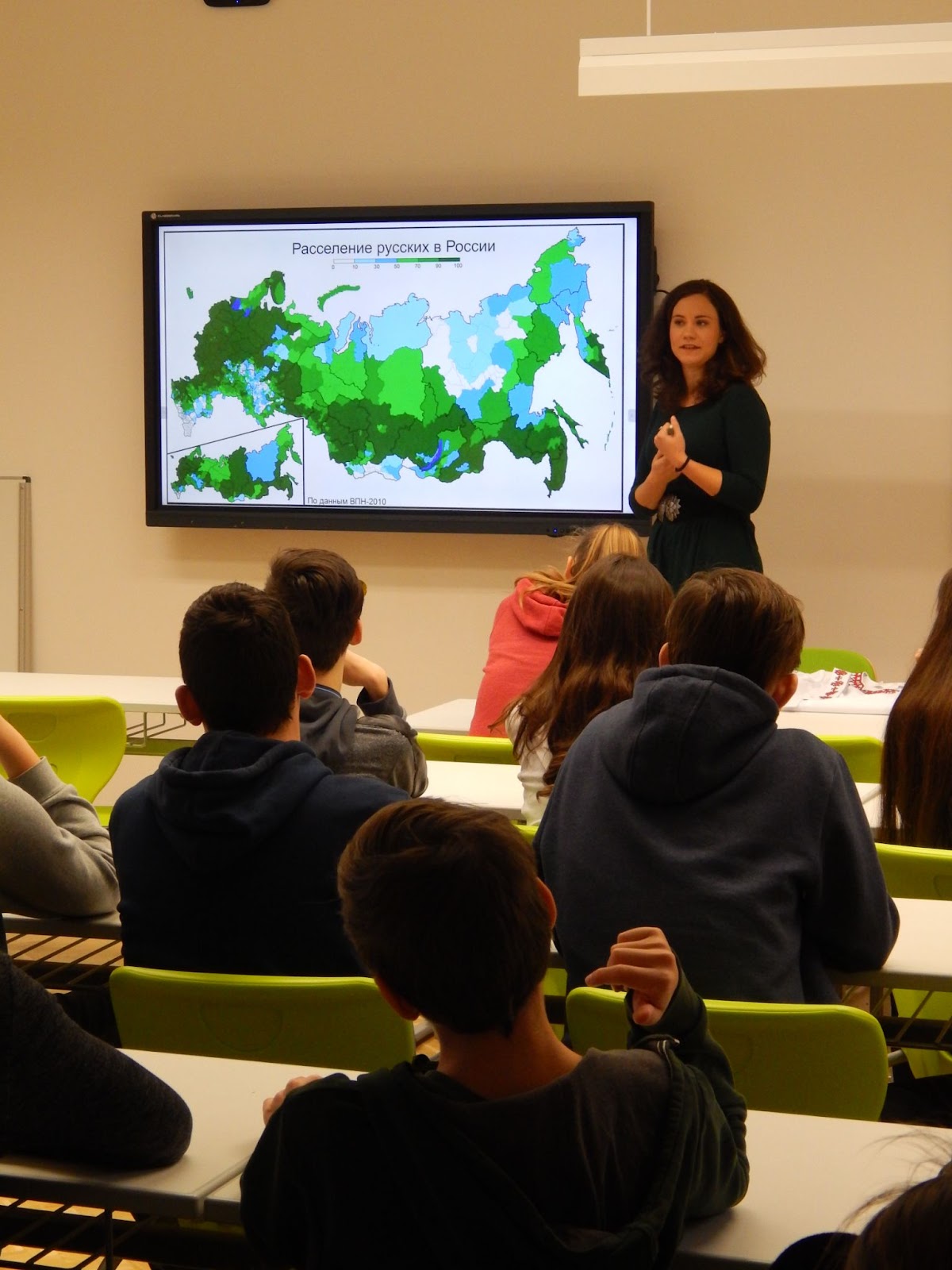
    I couldn’t help but share what I had found. I have always been a sucker for telling people about stuff they hadn’t known before, and I took a full nosedive into social media with my Finno-Ugric treasure. I first used my old university’s Facebook in Hungary. My colleagues joined in, and we shared pictures and anecdotes from fieldwork, overturned dumb articles, created memes and this quickly tripled our follower count. The success inspired us to visit schools where we introduced our work and the Finno-Ugric world. Our calendar filled up in a week. After I left the department in 2020, I created a Twitter account and kept posting my beloved Finno-Ugric trivia there. Now I have almost 3000 followers, I wrote to multiple newspapers, did several interviews and got invited to schools in my new home, Estonia. Have I become a Finno-Ugric influencer?

    First and foremost, I’m a linguist. I work in academia. And academics tend to be quite skeptical of social media. Understandably so, as academia is everything social media is not. It values rigorous, painstaking analytic work in search of truth, often taking years or decades. That’s its beauty. Its target audience is often narrow, and emotions are out of the question. 

    Social media, on the other hand, is all about emotion and speed. The whole genre builds on feelings – pride, anger, vindication – to generate clicks and further content. Everything is relative, everyone has “their own truth”. This irks academics who usually have a more intricate understanding on the subject than the level it is discussed on. Who hasn’t been frustrated by a completely made-up story gaining millions of views while the article they spent a year writing and researching is barely read by its reviewers? Who hasn’t rolled their eyes reading another dumb post about Finnish being the most ancient and complicated language in the world?

    Although social media is often viewed as an endless source of stupidity, it has still become one of my biggest sources of joy and validation. I found that people still crave authentic voices, actual experts of their fields. They’re grateful for new knowledge, even if it’s something they’ve never heard about. As a matter of fact, people love learning about Finno-Ugric languages, etymology or sociolinguistics, or whatever you throw at them if you throw it right.

    But what does it mean, throwing it right? It’s all about presentation, dressing the content into accessible clothing. Here are some examples.

    First, everything is more accessible if linked to something familiar. This is very tangible with memes, which are familiar frameworks reinterpreted over and over. Filling up a mainstream meme template with niche Finno-Ugric content is delightful. But the same idea can be caught with the Udmurt Despacito, or when Chuvash creators made ASMR videos playing with their folk jewellery: the familiar frame is the vessel that makes the new information attainable.

    Second, people like tension, between new and old, high-class and low-class. Linguistic minorities are usually associated with being folksy, historic, rural, conservative. Therefore, it’s intriguing to see them in a young, contemporary, urban and globalistic environment. Udmurt graffities or Mari ethno-punk challenge people’s preconceptions on these people, and create interest.

    Third, everybody likes a good story. It doesn’t have to be an actual journey with exposition, conflict and resolution, but with correct pacing (no more than 2 sentences in each paragraph) and illustration they can be irresistible. I have made threads about Russian hostility towards Finno-Ugric movements, spies, the role of the Estonian Institute, or Estonia’s importance in the Finno-Ugric movement – all ended up attracting a lot of attention, as it was broken down to bite-size chunks for people to digest.

    Fourth, never underestimate beauty, but don’t rely only on that. The internet is full of beautiful girls in folk clothes. But it’s way more interesting to add a story to the picture: that Udmurt brides wouldn’t cut a neckhole into the shirts they had woven until they got married, or that the rim of the Khanty dresses depicted the tribe they belonged to, e.g. a young grouse or a pike.

    And fifth, everything that makes you happy and interested probably makes others happy and interested as well. Funny? Share it. Inspiring? Share it. Shocking? Definitely share it. Nothing is as contagious as passion, and everybody likes to listen to people with passion.

    Knowledge is currency. It makes people richer – more educated, more interesting – compared to others. It’s fun, it’s inspiring, it’s irresistible. People like to be rich and are grateful if you make them so.

    And what to do with fake news? First, there’s no point in getting frustrated. It’s neither polite nor effective to shame a person for spreading untrue facts. Second, it’s not nice to rob anyone from their currency and not give them anything instead. So if you choose to debunk a myth (no Jussi, Finnish is not the most complicated and ancient language in the world), try to give an actual fun fact in exchange (but did you know kahdeksan and yhdeksän is actually ‘two from ten’ and ‘one from ten’? Did you know the word tundra comes from tunturi?). Jussi had fake money. I told him it’s fake but at least I gave him real money instead.

    Is this shallow? Maybe. But it’s my job to be a Finno-Ugric expert, not theirs. As one Cyanide&Happiness comic once said, sharing fun facts is not loving science, it’s looking at its ass as it walks by. But it’s nice to have an ass worth looking at.

  • Estonia is 106

    February 23rd, 2024

    Yet again I’m at Werner, enjoying the morning atmosphere, the look of fresh cakes, university workers dropping by for coffee, customers picking up their Independence Day orders in white cardboard boxes. Many people complain February is a waste of time, but in Estonia I’ve grown to love it. With Shrove Tuesday pastries and sledding, the anniversary of my immigration, Friendship Day and Independence Day, which is so enthusiastically celebrated, there is always something to look forward to. This is what Estonia looked like when I landed at the bus station 4 years ago with a huge suitcase and dragged it up the wonky stairs of the wooden house on the corner of Herne and Kartuli. Everything was new and magical, as if the dream image in my head had come to life.

    The day before yesterday I was back in ERM, which is one of the first destinaions I visited after my arrival. Then, in 2020, I nestled myself in the folklore library and tried to fathom he reality of it all. (Spoiler: you don’t fathom the reality of it all until you’re at least a year in.) Now, in 2024, I listened to a Hõimuklubi lecture about a Vote ethnic group that had broken away to Latvia, and I moved around the museum like one of the most familiar places on Earth.

    What becomes routine obviously fades its bright colours. I get used to Werner’s cakes and realize they’re not all that great. I get used to the wonderfully crooked wooden houses of Supilinn and Karlova, and I learn that they are rotting, uncomfortable and falling apart. I get used to the melodic, ticklish Estonian language, in which so many insults have been thrown at me.

    But this will make neither Werner, nor the Karlova and Supilinn street views, nor the Estonian language worse. (Maybe Werner a bit.) I may no longer get butterflies in my stomach walking through downtown, but when I stop my thoughts for a second, I’m still overwhelmed by how glad I am to be here.

    In the 4 years, Estonia has gotten more detailed, more wrinkled and worn-down. Some things don’t work as they should, some Estonians are not as well-meaning as they could be, the diseases of this world are creeping into into these heads around me. Mine, too.

    But with details come new beauties. Visiting rural events, listening to local choirs, watching amateur theater performances, looking around the Christmas/spring fairs have become some of our favorite activities with Anti. The village fools in linen shirts, the smiling aunties offering cookies are my friends. I’ve met the people who keep the countryside alive. I’ve gotten to a high school in Tallinn, the middle of the forest in Hiiumaa, rivers in Soomaa, a Vote/Izhorian separatist café in Narva, the roof of ERM, a shamanic drumming trip with a sauna witch in Võrumaa, Orthodox Christmas porridge in Obinitsa, the opening of the Estonian deaf museum, Postimees, Terevisioon, libraries and people’s heads. I have an apartment here and neighbors who treat me to homemade wafers and brochures about Jaak Madison.

    And there is so much more to discover.

    It’s evening now, and I’m sitting in my usual place by Raekoja Plats, watching the pub fill up. Estonians celebrate, and rightfully so. That Russia decided to invade Ukraine 2 years ago on this very day only fuels the patriotism.

    Minu arm – this was the motto of the first song festival I attended. It was the most painful experience of my life. Sitting in the grass, I saw crystal-clearly where I wanted to belong and what was holding me back. In my pain, he next day I stole a sheet of paper from the Viru keskus Apollo and translated Kristiina Ehin’s Saaremaa Valss. Half a year later, I moved here.

    My love is Anti, and my love is Tartu, but my biggest love is Estonia.

  • The President of Hungary has resigned and it’s crazier than you think

    February 20th, 2024

    On 17 February, Viktor Orbán held his annual evaluation of the year. He did so without a president, and without a leader of his party’s list in the upcoming EU elections – both of them resigned a week before. In his 14 years of leading Hungary, neither him nor his government have ever looked so weak.

    The President of Hungary, Katalin Novák announced her resignation on 10 February. Her career ended when the press revealed that in April 2023 she had pardoned the deputy headmaster of an orphanage, who helped the pedophile headmaster cover up his molestation of childen, and tried to force the underage victims to withdraw their accusation. A few minutes later Judit Varga, who had ratified the pardon, and who until then was the leader of the party’s list in the upcoming EU elections, announced her withdrawal from public affairs.

    The case was hard to fathom from the beginning. Who would pardon a pedophile’s aide? It is one of the most disgusting crimes a person can commit. Moreover, Viktor Orbán’s ruling party Fidesz prides itself in its family-friendly politics, and Katalin Novák, former Minister of Family Affairs, devout member of the Hungarian reformed church, and herself a mother of three, was the public face of this endeavour. Why did she grant this pardon?

    We know the Ministry of Justice didn’t think this was a good idea. The Ministry, which receives all appeals to presidential pardon, suggested rejecting this appeal, but the President still proceeded with granting it. Then justice minister – Judit Varga – eventually ratified the pardon. She could have denied to do so, and the decision would have never come into force. This suggests that someone really wanted the deputy headmaster free, and had enough leverage to not only have Katalin Novák ignore the lawyers’ suggestion, but Judit Varga to go against her own ministry, too.

    Of course, suspicion quickly turned towards Viktor Orbán. After all, both Novák and Varga were his creation and represented his politics. And yet: as unbelievable as it seems, most likely he did not know about the pardon. He was blindsided by his own people: the person that lobbied it out was Zoltán Balog, Bishop of the Hungarian Reformed Church, and longtime close ally to Orbán. He had been even closer to Novák, acting as his mentor and spiritual leader throughout her career. Allegedly, staff members had long complained about Balog regularly showing up at the Presidential Palace, and meddling with state issues like a modern-day Rasputin, abusing his influence over the President. Various sources claimed it was Balog who requested Novák to grant the pardon to the deputy headmaster, whose family had close ties with high-ranking members of the Hungarian Reformed Church.

    Initially, though Balog admitted his influence, he refused to take responsibility. This caused an enormous moral crisis within the church, which 10% of the Hungarians, including Viktor Orbán and myself, belong to. Upon immense pressure, he resigned from being President of the Reformed Synod, but he is still a bishop.

    And Orbán is furious. Based on his Saturday speech, quite obviously he’s living an autocrat’s worst nightmare.

    First, his own people put his name in jeopardy. Fidesz is famously disciplined and hierarchical, and nothing gets said or done without the consent of Orbán and his closest advisers. In this system, a private stunt like pardoning a pedophile’s aide behind his back is almost unbelievable disobedience.

    Second, it was the independent media that exposed him. He spent so much money and effort on suppressing any media outlets that are not under his control. Yet, the scandal erupted on 444.hu, one of the few portals independent of his media apparatus. If the rumors are true, he himself learned what happened from those articles.

    Naturally, massive protests erupted in the wake of the scandal. Tens of thousands of people gathered on Heroes’ Square on 16 February to express their outrage at a system that lets bishops protect orphaned children’s molesters while posing as religious and family-centered. Many of the protesters had not gone on the streets since 1989. The demonstration was special also because it was not organized by opposition parties but by popular influencers and musicians.

    But let’s be honest: as someone who’s been protesting the system since 2012, I know all too well demonstrations have no real impact. Orbán’s system is not shaken by some tens of thousands of people on Heroes’ Square. His system was shaken when he polled his own supporters, and learned they were just as appalled by this pardon. It’s the pious, rural, conservative Fidesz voters who forced him into retreat.

    Orbán clearly did not want to lose Novák, Varga or Balog. But his empire was shot in the heart by this disgusting case. He had to sacrifice his soldiers, which he almost never does. He handled the scandal with utmost professionalism, but it was still an emergency measure.

    These are signs of a country that hasn’t completely succumbed into autocracy. Despite all his efforts, even Orbán can’t get away with anything.

    In his annual evaluation speech, he tried to waste as few words on the scandal as he could. He emphasized looking into the future. In reality, he still doesn’t know what to say about it.

    Whatever the future holds, it will be interesting to watch.

  • What happened to Hungary?

    January 23rd, 2024

    published in Postimees, 31 July 2022

    I like being a Hungarian in Estonia. Two and a half years after having moved here, I’ve always felt welcome. Estonians not only appreciate my efforts to learn their language and culture, but they often welcome me as vennasrahvas. Many, especially in the older generation, tend to have fond associations and a sometimes startling amount of knowledge about Hungary, and almost everybody has sporadic memories of Hungarian history from their textbooks. Which is very flattering. Yes, I am from the nation of authentic gulyás, horse riders, freedom fighters and Kapten Tenkeš, and yes, in my language gumimatrac means kummimadrats.

    However, another thing that keeps coming up when my nationality is brought to light is politics. Estonians generally lack the condescending tone that most Westerners and Americans would have in the matter, but still they do ask: what happened to Hungary? What’s going on there and why?

    I appreciate the genuine concern of Estonians, which is somewhat unique to the world. It is the concern of a distant relative, towards someone like an eccentric uncle they might have even used to look up to. Now the eccentric uncle seems to have succumbed into an embittered, paranoid, conspiracy theory-binging internet troll that is awkward to be around. Just a few days ago (23.07.2022), Viktor Orbán in his annual speech in Tusványos, Transylvania, made points about racial purity, the sin of mixing races and the decay of the West that would make even Varro Vooglaid blush. (update: he did not blush.)

    So really, what happened to Hungary?

    This is a story that I’d like to tell in the future, as this is a much longer story than the one of Orbán and his reign. 

    I believe current Estonia is what Hungary could have, and should have become after 1989. After regaining independence, it went straight West. It didn’t try to be “exceptional” or “mediate” between the Eastern and Western world, nor did it go down the pretentious path of “neutrality”. It invested in the social sphere, such as education and healthcare, the results of which are clearly showing today. It most definitely doesn’t revel in some kind of lost glory, nor does it believe the world owes it some kind of justice, which would have been a terrible trap to fall into. One of the things I most appreciate in Estonian society is its forward-thinkingness. Estonians feel responsible for their country and are not waiting around for somebody else to save them.

    In contrast we, Hungarians, the people of hot paprika and freedom fighters, have always felt a massive amount of hubris. This sentiment of lost grandeur and being wronged by other nations prevented us from transforming into a democratic society in those early days of freedom, which resulted by missed chances, neglected social sphere and rampant corruption. But more was lost than money: Hungarians lost their faith in democracy. This, added to the exceptionality complex, was perfect soil for Orbán’s regime to thrive on, and by tapping into our worst traits, he managed to sicken Hungarian society into their current, mildly fascist state. Even those who resist the system. No matter how one tries to shield themselves from the regine, the surrounding society will inevitably affect them.

    Recently I got interviewed by an MA student at Skytte Institute researching how people’s political thinking changed after their move to Estonia. During this conversation did I realize what fundamentally changed now that I see the world from a 1000 km distance further up North. I’m not the person I was when I moved here.

    First, I became much less exposed to Russian propaganda. By the time I left the country, I hadn’t been consuming Hungarian state media for a decade, which is now pouring unfiltered Russian propaganda on its citizens. (They call the Russian advancement in Donbas as “liberation” unironically, and quote separatist leaders as “experts”, to just name a few examples.) Yet, even the remaining independent media seems to be confused about what Russia is and does. Hungarians don’t understand Russia the way the Baltics or Poland does, and are hesitant to use the harsh language it deserves. As a researcher of Finno-Ugric peoples in Russia who has seen one or two things there, and heard one or two stories, I am almost certain that back home I would have lost my mind in frustration. I am humbled and grateful to live in a country that is not afraid to call a dog a dog, and continues to do so in international platforms.

    Second, I re-learned how to be a citizen and mend my relationship with politics.

    I often hear Estonians complaining about their politicians. Reform is too dominating, Isamaa multiplies by division, Kesk is inconsistent, SDE is snowflaky, EKRE says outrageous things. (My favorite has to be homoteerull.) Yes, Estonian politics can be frustrating and complicated, but what people tend to forget is that politics is meant to be frustrating and complicated. That’s much better than simple and straight. However annoying one’s unfavoured party is and however dumb their voters seem, Estonian politics still mainly revolves around actual issues in current reality. Whether it is about Russian-speaking schools, nuclear plants or where to put the new Südalinna Keskus in Tartu, these issues are openly debated, in conversation with the citizens.

    This is not the case in Hungary. In Hungary, decisions are made long before they are presented to the public. The only thing they do is wrap the decision into some makeshift ideology (usually along the lines of “protecting” the citizens from whoever they declare enemy). If it’s a hard sell, they can always blame Soros. There is no public debate. Nobody has a say. There are no coalitions and barely any consequences of mismanagement or corruption. For a politician to resign, they have to be caught naked and high on drugs, hanging from a drainage pipe escaping a homosexual orgy in Brussels in the middle of the pandemic. (If you don’t know what I’m talking about, google József Szájer.) In Hungary, politics are simple and straight and it feels like a prison.

    Democracy is a fragile thing. It doesn’t come by itself when a dictatorship ends. It first has to be learned, and then constantly cultivated, even when it feels like a burden. No democracy is bulletproof, and one of its best poisons is the hubris of believing “it can never happen here”. I’ve been listening to that lie for 12 years and it always happened. Hungary’s story is not unique and unrepeatable: all that needs to happen is to lose faith in democracy, and someone interested in playing king will surely show up.

    I didn’t move to Estonia because of the economic prospects, e-residency, startup culture or Nordic comfort. I moved here because I wanted to live in a healthy society, interested and invested in its own well-being. To live somewhere, where, as my mother put it when she first visited me, you can smell the freedom in the air.

  • How to divide a country

    January 23rd, 2024

    published in Postimees, 20 August 2022

    On 20 August, coincidentally, Hungary and Estonia both celebrate a national holiday. The two holidays cannot be more different than each other: one celebrates the creation of its thousand-year empire that still stands in the embrace of the Carpathian Basin, the other its last secession from an empire – now is its 31th anniversary. Flags flutter on the streets of each country, concerts and parades are held, fireworks are shot.

    I always watched with envy how proudly Estonians display their colors. They seem to be everywhere: on cars, bags, jewelry, clothing and home decor – Estonians seem to be happy to fly their flag just whenever and wherever. Even in nature, you can’t escape it: blue, black and white seem to be formulating everywhere one gones, be it the winter forest or the seaside, and if they’re absent, surely some roadside rukkilill and flying sparrows will substitute them.

    You wouldn’t see such an abundance of Hungarian colors in Hungary, and even where you did, it would mean something totally different from national unity. Like many things, this is rooted in the Soviet times, and later perfected by Orbán’s government.

    Back in the days of the Soviet occupation, the Estonian flag was banned. The original flag has a romantically fascinating story of surviving in a chimneyway in the countryside, and in the 80’s, displaying the flag was a sign of open rebellion. If you flew them, you had guts. It was a tool to rise against the oppressive system.

    In Hungary though, our flag was always red-white-green. After 1949, a Soviet-style coat of arms was placed in its middle, which was cut out during the Revolution of 1956, creating the famous new symbol of the flag with the hole in the middle. In later times of Socialism, Hungarians were free, even encouraged to celebrate their national holidays, wear their national symbols, and Üles, madjar! Kodu kutsub. Aeg on käes – kas nüüd või iial! was recited together with Nüüd üles, keda needus rõhub, nälg, orjus ikkes hoiavad.

    Most Hungarians don’t feel the way Estonians do about their flag. However, we have the kokárda, the red-white-green ribbon knot in memory of the 1848 revolution. It is worn on 15 March, when people pin the knot on their lapel to remember their rebel ancestors. I remember anticipating this day, when I can display nationality, and feel united with my fellow Hungarians. Then came Viktor Orbán.

    In 2002, a right-wing civil organization started a movement, asking “true patriots” to wear their kokárda until election day, 7 April. That civil organization clearly meant Orbán’s party, and a person wearing a kokárda became an unmistakable sign of a Fidesz voter. On the streets, at the workplaces the population was visibly split into two distinct groups: one that was wearing our unifying symbol of revolution, and one that was not. Fidesz lost those elections, but my mother hasn’t worn a kokárda ever since.

    In 2010, after the definitive victory of Fidesz, began the loud monopolization of patriotism: when Orbán won, he renamed almost all state institutions with something starting with National, and declared his aspiration to be the prime minister of all Hungarians. Though sounds noble, it quickly became clear what he meant: instead of trying to appeal to all citizens, he planned to define who counts as Hungarian.

    If you listen to Orbán’s speeches, he never talks about his voters. He talks about the Hungarians. If he wants something, the Hungarians want it. If he wins, the Hungarians won. If he loses, the Hungarians are under attack. In his speeches he describes Hungarywith loving words as the warm, welcoming, fuzzy place you can always return to, where you are understood, the one you can always call home.

    But what about those who didn’t vote for him? Are those millions not Hungarians? Are they against Hungary? Are they traitors?

    By now, most of them feel excluded from their nation. They might not feel so, had kokárda not become suddenly Fidesz, had nation not become suddenly Fidesz. There are no alternative ways to love your country than the version that is offered to you. Through the billboards and the leaflets and the propaganda media, the message couldn’t be clearer: if you are not with us, you are against us, therefore you are against Hungary.

    There are always parties who try to sell themselves as “true”, or “better” patriots who are somehow more worthy to carry the national flag. However, most parties in the EU simply don’t have the power and resources to perfect it like Orbán did. I can tell its consequences though.

    According to a 2021 survey, two-third of young adults who are dissatisfied with the government (and only about 25-30% of them support Fidesz) are planning to leave the country. This is by far the highest in the region. And though it might not be the decisive factor, feeling unwelcome in their homeland surely helps them make the move. It definitely helped me. Some are simply heartbroken for being labeled unpatriotic, some, like my mother, can no longer identify with our symbols, some even grow hostile to their own nationality and reject it.

    I stubbornly refuse to let any government hijack my nation’s colors from me, and I wear them proudly whenever there is a reason to. Whether I like it or not, I am a Hungarian, and on days like 20 August, I try to remember all the good things that come with my nationality. Last year though, I started to wonder: what message does it convey to carry a Hungarian flag on your chest in Estonia? Does it make the implication that I support the current Hungarian government and its deeds? Does that imply that I may support EKRE?

    Last July, while campaigning for the Presidency, Henn Põlluaas was flying a Hungarian flag next to his podium in Tartu. Why? He didn’t talk about Hungary on the spot, nor was it a national holiday or any celebration. Later that day, Delfi published an explanation as it was a symbol to show support for proceedings taking place in Hungary. Here in Estonia, my country’s flag became Orbán.

    Of course, this is EKRE. Many of its members have expressed their admiration for Orbán and his politics. Though I disagree, I would never doubt these people’s love for Estonia. But there are very few things that can harm a nation more than robbing a vast amount of its citizens from their patriotism. In that sense, Orbán’s Hungary is not the role model – it’s the most cautionary tale.

    One’s national identity is a deeply personal thing. This is why politicizing its symbols – flags, knots and cornflowers – works. They can be symbols of unity, as well as division. In Estonia, they still symbolize unity. I hope it stays this way.

  • When dictatorship is veiled as democracy

    January 23rd, 2024

    published in Postimees, 27 September 2022

    On 18 September, the European Union executive recommended suspending some 7.5 billion euros in funding for Hungary. The explanation is widespread corruption, and Hungary was also named the first non-democratic country within the union. The sum to be held back is 5% of the country’s entire yearly GDP, and would hit in the middle of an energy crisis.

    This is an exceptional ruling and also a first for the EU. Still, here in Estonia I find many Estonians unsure why it happened. Even if one’s not particularly fascinated by Viktor Orbán’s freedom-fight-infused politics – though many are -, they may still ask: how bad can it possibly be? After all, he is Hungary’s democratically elected leader. Hungarians clearly seem to want him, and seem satisfied with his politics.

    So this is democracy, right?

    One of the things I find hardest to live with in Estonia is the general misunderstanding of propaganda, as well as the impatient dismissal of its power. After all, decades of occupation didn’t break Estonians’ spirit. They preserved their flag as well as their backbone, they stood hand in hand, they sang themselves into freedom, united, active, strong. They picked themselves up and created a prosperous country. Look at the war: they were even right about Putin all along, and now the entire world admits that.

    So those countries crumbling under divisive and hateful propaganda must be weak, stupid or evil. Otherwise, why don’t they unite and chase away their tyrant?

    Hungarians are not stupid and evil, at least they originally weren’t. In the last twelve years, I watched them change. To understand what happened, one has to know that the entire state media is Orbán’s propaganda. Whatever he thinks is echoed a thousandfold, amplified by one of the two main commercial TV channels, all regional websites and newspapers and most of the largest news sites. Opposition in TV is almost nonexistent and opposition radio did not get a single frequency for years now, while numerous were recently shut down. In the countryside if you don’t have access to the internet (and many don’t), you don’t have access to any news other than Orbán’s. So why would you doubt it?

    In the election period this spring, Fidesz had eight times the advertising space than that of the opposition. In the last four years, the opposition got 5 minutes of total screen time on state TV. Tens of millions of Hungarian forints were poured into Facebook and Youtube advertisements on taxpayers’ money, way exceeding the lawful campaigning limit, constantly trashing the European Union (which is usually referred to as ‘Brussels’), and spreading the news of Russia’s inevitable victory, as well as the imminent dissolution of the EU.

    For expats (that are usually hostile to Orbán and Fidesz), voting from London or Helsinki was needlessly overcomplicated, not to mention that 2 voting spots were opened in the entire UK (estimated Hungarian population: 200 000) as well as in France (estimated population: 200 000). However, mail votes of the historical Slovakian and Transylvanian Hungarian diasporas are insanely unregulated. You could easily vote in anybody’s, even dead people’s name, the ballots were not sealed, and were collected by Fidesz activists.

    Village mayors knocked on people’s doors, accompanied them to the booths and showed them where to put the X. Some bosses required their employees to send a photo of their ballots to make sure they were cast on Fidesz.

    So yes, in a democracy like this, the people democratically elected Fidesz as governing party with an absolute majority, and Viktor Orbán for Prime Minister, for the fourth time in a row. By now, an entire generation has grown up without knowing any other Prime Minister, so they might struggle to understand what elections are for.

    In the meantime, propaganda keeps working. According to the latest survey, the slight majority of Hungarians are moderately pro-Russian, and only 15% are firmly pro-Ukrainian. Unlike Estonians, Hungarians don’t like to follow war news: they remain confused, disengaged, unsure what to think, and even more threatened by the decaying morals of the West than the genocidal empire waging war with their neighbor. Meanwhile, my own little business is booming: a record number of people want to learn Finnish from me and emigrate.

    Is every Hungarian personally responsible for this? Is it one’s personal responsibility to form their informed opinion when mass media is so one–sided, ~25% of the population is a functional anaphabet and education is deliberately underfunded? I don’t know. Maybe in Estonian eyes, we do qualify as a weak and corrupt nation. But definitely not as a role model.

    As for the proposed money cut, this is a first for Europe. No liberal or illiberal regime ever got to the point of such harsh – prospective – reprimand from within the union. Of course, the systematic stealing of EU funds for a select group, grandiose vanity projects and anti-EU smear campaigns were common knowledge for many years now. So why now? Maybe being Putin’s thinly veiled agent, sabotaging sanctions, Finland and Sweden’s NATO admission, striking up special deals with Russia and openly rubbing against America’s MAGA movement might have just broken the camel’s back. It was long overdue.

    Orbán reacts in his usual Orbán way: Hungarian media is loud with Brussels’ attack on the freedom of Hungarians, the leftover independent media is referred to as “Soros’s blog”, while with as much discretion as possible, he’s trying to meet the required standards without much compromising on his system. He has until 19 November to do so, when the issue is discussed by the European Council.

    I think of my family, and it breaks my heart, but I hope he fails.

1 2
Next Page→

Blog at WordPress.com.

  • Subscribe Subscribed
    • Bogáta Timár
    • Already have a WordPress.com account? Log in now.
    • Bogáta Timár
    • Subscribe Subscribed
    • Sign up
    • Log in
    • Report this content
    • View site in Reader
    • Manage subscriptions
    • Collapse this bar